The Death of the Chat Box
For the past few years, our primary interaction with artificial intelligence has been confined to a browser tab. We type prompts into a text box, wait for a streaming response, and manually copy the results into our actual workspaces. This paradigm is rapidly coming to an end. Major technology companies are aggressively pivoting toward integrated, OS-level personal agents designed to execute complex, multi-step tasks autonomously.
Recent moves by Google and Meta highlight a significant shift in strategy. The race is no longer just about who has the smartest foundational model. It is about who can best integrate that model directly into the operating system and applications we use every day.
The Rise of Native Integration
Google recently made headlines by shutting down Project Mariner, an experimental browser-based agent. Rather than signaling a retreat from agentic AI, this move indicates a consolidation of efforts. Google is now internally testing a native personal AI agent codenamed “Remy” built directly into the Gemini application infrastructure. Concurrently, Meta is testing its own autonomous agent, “Hatch”.
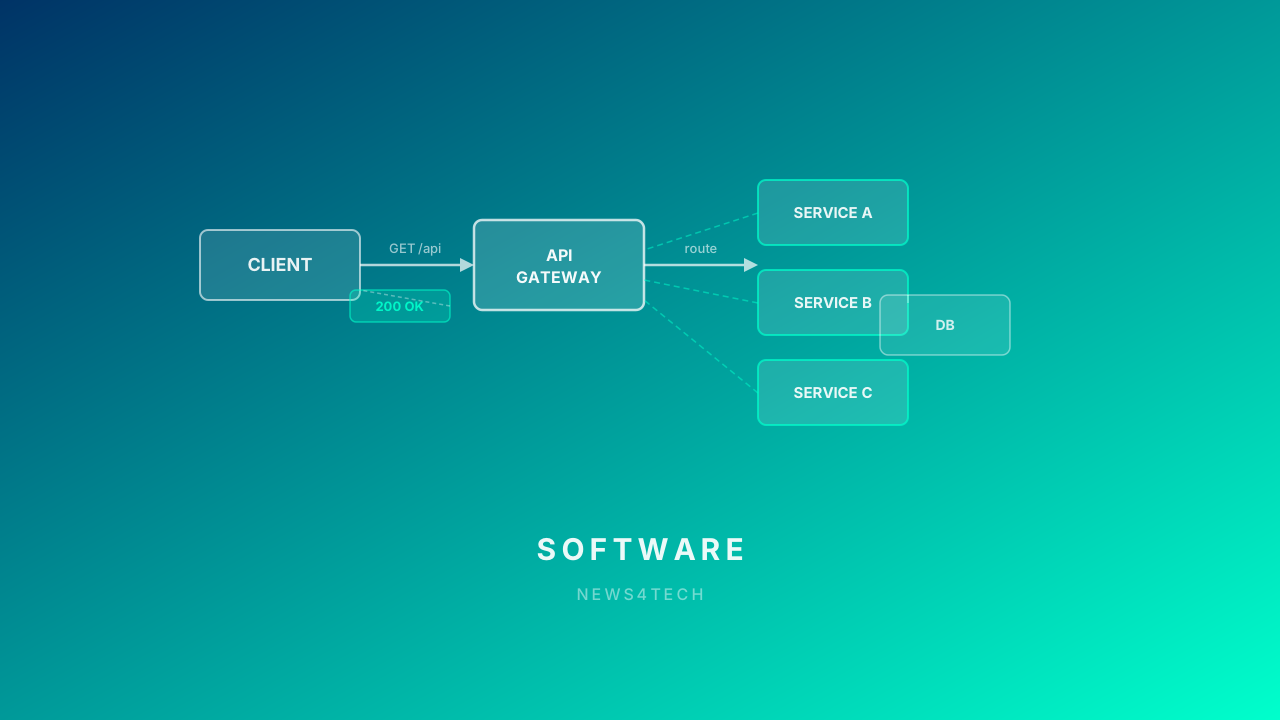
These new agents are not designed to answer trivia questions. They are being built to interact with APIs, manage calendars, parse emails, and execute workflows without constant human supervision.
To support this shift toward native execution, the underlying infrastructure of our devices is changing. In a highly debated move, Google Chrome recently pushed a silent 4GB update to users containing the Gemini Nano AI model. By pushing the model directly to the local machine, Google is ensuring that basic AI tasks can be processed with zero latency and without sending sensitive data to the cloud. Furthermore, Google has introduced multi-token prediction drafters for its Gemma 4 models, speeding up text generation and decision-making by threefold.
The browser was the sandbox for AI experimentation. The operating system is the battlefield for AI actualization.
Why It Matters
This transition from web wrappers to local, native agents changes the fundamental relationship between humans and computers.
For developers, the integration of 4GB local models into standard applications like Chrome means that web applications can now leverage powerful machine learning APIs directly on the client side. This will spawn a new generation of lightweight applications that do not require expensive cloud inference costs.
For the everyday user, the concept of “using an AI” will disappear. Instead of visiting a specific URL to ask a question, the operating system itself will anticipate needs. An agent like Remy will have the necessary system-level permissions to observe your workflow, draft responses, organize files, and execute software commands autonomously.
However, this deeply integrated approach raises monumental privacy and security questions. Granting an autonomous agent access to native file systems and private communication channels requires an unprecedented level of trust. The companies that can balance this immense utility with ironclad user control will ultimately win the next era of personal computing.